How to squat? Will it damage my lower back and knees? These are common questions... Take a look at these two links, written by experienced people. I do not recommend squatting where your knees go below parallel to the ground.
Christian Finn, a fitness guru, shares his tips in this article
http://muscleevo.net/how-deep-should-you-squat/
http://functionalanatomyblog.com/2012/11/15/proper-bodyweight-squatting-form-with-dr-spina-for-jitsmagazine-com/
The video shows Dr Andreo Spina, a chiropractor, giving tips on how to squat.
Showing posts with label chiropractor. Show all posts
Showing posts with label chiropractor. Show all posts
Friday, January 4, 2013


Monday, December 24, 2012
Body beautiful and injuries?
Many people who go to the gym eventually end up with shoulder pain due to overtraining (endless bench press, or pushups) and sloppy technique. Hence, it is reasonable to say that a balanced training program is important. Here are a few tips:
1) Train the whole body using movements that involve the 'entire' body instead of muscles in isolation. For example, a dumbell curl is pretty much an isolation exercise that works the biceps. You can save time and work your arms, shoulders, etc by doing other exercises such as squats with dumbell at shoulder level, etc.
2) Work on the smaller, stabilising muscles. In this post, I found three great videos where the physio to the Navy SEAL team gives some advice. Enjoy!
Knee pain
http://www.youtube.com/watch?v=iNgtVAIdIH8
Shoulder pain
http://www.youtube.com/watch?v=dk86iHgbdwQ
http://www.youtube.com/watch?v=tn3W9i7r8zk
1) Train the whole body using movements that involve the 'entire' body instead of muscles in isolation. For example, a dumbell curl is pretty much an isolation exercise that works the biceps. You can save time and work your arms, shoulders, etc by doing other exercises such as squats with dumbell at shoulder level, etc.
2) Work on the smaller, stabilising muscles. In this post, I found three great videos where the physio to the Navy SEAL team gives some advice. Enjoy!
Knee pain
http://www.youtube.com/watch?v=iNgtVAIdIH8
Shoulder pain
http://www.youtube.com/watch?v=dk86iHgbdwQ
http://www.youtube.com/watch?v=tn3W9i7r8zk
Feet exercise
This is a great post about exercises for the feet by Dr Andreo Spina, a chiropractor. Give them a try. I would not recommend towel scrunching if you already have bunions. Be prepared for sore feet!http://www.youtube.com/watch?v=2OOJ9AQ1AEg
Tuesday, January 10, 2012
chiro, physio, acupuncture or massage?
Which is better for rehab after sports injury? Chiro, physio, acupuncture, or massage?
It really depends on the nature of injury... if there are broken bones (fracture), torn ligaments (ankle, knee, shoulder), or torn tendon (shoulder rotator cuff), then it's wise to let the orthopedic specialists examine first.
 Every healthcare professional holds a piece of the puzzle for better rehab after an injury...
Let me share a few key principles with you.
1. Reduce PAIN - many ways to achieve this... Painkillers block the pain signals and anti-inflammatory drugs can reduce the swelling (bengkak). Cold pack or ice wrapped in cloth can also be applied on the area provided there are no cuts or open wounds. TCM practitioners may prescribe some herbal recipe to boil and drink, while bone-setters (titda) may wrap the injured area with Chinese herbs to reduce the swelling (provided there are no cuts or open wounds).
You can read some guy's blog about his visit to a semi-traditional Chinese medicine centre... http://www.shaolintiger.com/2008/08/09/osso-bone-care-fix-your-joints-bones-general-pains/
 Granted, it is difficult to find an experienced bone-setter nowadays but there are some around. Do e-mail me for more info (info@everhealth.asia)
2. Gradually increase MOBILITY (range of motion). Two ways to achieve it - via exercise and treatment. Here is where physio and chiro may excel because physiotherapists and chiropractors have knowledge about what exercises to recommend for *gradual* improvement. Skip the over-enthusiastic gym trainers for the time being!!
Treatment to increase mobility - acupuncture can be used to decrease pain, increase circulation to the injured area and some TCM practitioners may also add some massage (eg, tuina), pulling movements, etc.

Physio may use certain stretching techniques, etc to increase mobility while chiro may adjust the joints if necessary.
3. Improve strength and coordination. Depending on the nature and severity of injury, you may sometimes not be able to re-gain the level of strength and coordination as prior to your injury... but at least you will have a better quality of life and can get back to activities of daily living (walking, lifting, reaching, etc) with minimal pain.
As I have mentioned before, skip the over-enthusiastic gym trainers for the time being!! Knee, shoulder and back injuries can take a long time to heal... so you definitely don't want to go back to square one by doing exercises that you are not ready for. For example, jogging or doing full range squats when your knee is not ready for it.

What if you have a chronic sports injury (eg, six months up to several years)? Chronic injury usually leads to scar tissue or knots and relevant muscles will not work properly. For example, if you have an injured rotator cuff (assuming nothing is torn) for many months or years, you may not be able to move in certain directions such as reaching upwards. Hence, other muscles have to substitute to help you reach upwards... and over time you may find that you feel tight below the neck area.
For treatment of such chronic problems, you need a combination of deep massage and perhaps ultrasound (which on its own provides rather slow progress) to remove the scar tissue. Physiotherapists, massage therapists, and Rolfers would be able to help in this respect. Tuina or some bone-setters also know how to massage but since your problem is chronic, you need to bear in mind that the area that requires massage may be *more* than just the originally affected area (eg, shoulder). Hence, physiotherapists, massage therapists, and Rolfers may be more experienced in this aspect.
To find more about ultrasound, you can read here http://www.pthealth.ca/therapy_services.php?services=6

Finally, you also need to re-educate the brain (nerves) on how to move and use the proper muscles. In this aspect, physio is a good bet.
It really depends on the nature of injury... if there are broken bones (fracture), torn ligaments (ankle, knee, shoulder), or torn tendon (shoulder rotator cuff), then it's wise to let the orthopedic specialists examine first.

Let me share a few key principles with you.
1. Reduce PAIN - many ways to achieve this... Painkillers block the pain signals and anti-inflammatory drugs can reduce the swelling (bengkak). Cold pack or ice wrapped in cloth can also be applied on the area provided there are no cuts or open wounds. TCM practitioners may prescribe some herbal recipe to boil and drink, while bone-setters (titda) may wrap the injured area with Chinese herbs to reduce the swelling (provided there are no cuts or open wounds).
You can read some guy's blog about his visit to a semi-traditional Chinese medicine centre... http://www.shaolintiger.com/2008/08/09/osso-bone-care-fix-your-joints-bones-general-pains/
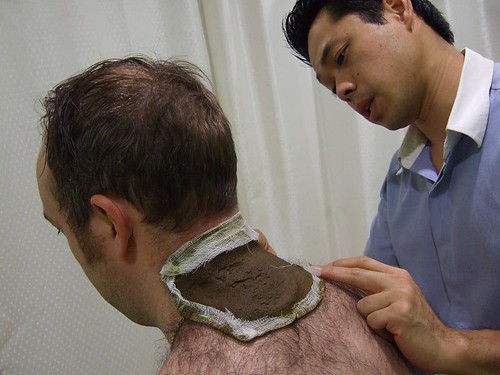
2. Gradually increase MOBILITY (range of motion). Two ways to achieve it - via exercise and treatment. Here is where physio and chiro may excel because physiotherapists and chiropractors have knowledge about what exercises to recommend for *gradual* improvement. Skip the over-enthusiastic gym trainers for the time being!!
Treatment to increase mobility - acupuncture can be used to decrease pain, increase circulation to the injured area and some TCM practitioners may also add some massage (eg, tuina), pulling movements, etc.
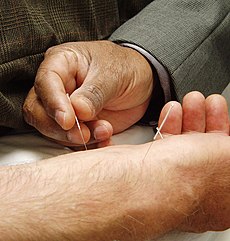
Physio may use certain stretching techniques, etc to increase mobility while chiro may adjust the joints if necessary.
3. Improve strength and coordination. Depending on the nature and severity of injury, you may sometimes not be able to re-gain the level of strength and coordination as prior to your injury... but at least you will have a better quality of life and can get back to activities of daily living (walking, lifting, reaching, etc) with minimal pain.
As I have mentioned before, skip the over-enthusiastic gym trainers for the time being!! Knee, shoulder and back injuries can take a long time to heal... so you definitely don't want to go back to square one by doing exercises that you are not ready for. For example, jogging or doing full range squats when your knee is not ready for it.
What if you have a chronic sports injury (eg, six months up to several years)? Chronic injury usually leads to scar tissue or knots and relevant muscles will not work properly. For example, if you have an injured rotator cuff (assuming nothing is torn) for many months or years, you may not be able to move in certain directions such as reaching upwards. Hence, other muscles have to substitute to help you reach upwards... and over time you may find that you feel tight below the neck area.
For treatment of such chronic problems, you need a combination of deep massage and perhaps ultrasound (which on its own provides rather slow progress) to remove the scar tissue. Physiotherapists, massage therapists, and Rolfers would be able to help in this respect. Tuina or some bone-setters also know how to massage but since your problem is chronic, you need to bear in mind that the area that requires massage may be *more* than just the originally affected area (eg, shoulder). Hence, physiotherapists, massage therapists, and Rolfers may be more experienced in this aspect.
To find more about ultrasound, you can read here http://www.pthealth.ca/therapy_services.php?services=6

Finally, you also need to re-educate the brain (nerves) on how to move and use the proper muscles. In this aspect, physio is a good bet.
Friday, July 8, 2011
Ouch my feet! Flat feet and more...
Earlier in June, my classmates and I attended a workshop conducted by Dr. Mark Charrette. Dr Charrette is a chiropractor who has researched treated many people who suffer from foot problems. So I thought of sharing some key points:
1. Ligaments plasticly deform
Ligaments are connective tissues which function like straps to keep bones together. As you can see in the picture below (taken from Gray's Anatomy), there are *many* ligaments which keep bones in your feet together

Although flexible and quite tough, once ligaments are over-stretched or damaged, they will not return to their original shape/form... much like Cling Wrap (the plastic-like thing you wrap over a bowl of food and then put in in the fridge or microwave) which does not return to its original shape after being stretched.
2. We *develop* [over]-pronation and [over-]supination (ie, we are not born with)
Note: There are genetic factors that may make people likely to inherit flat feet (low arches), high arches, etc.
Pronation = sole out, toe up and out which creates the effect of knee and feet rolling inwards. Since, we develop this 'style', it goes without saying that even people with high arches or low arches may develop [over-]-pronation.
(Supination is the opposite)
3. It seems that tilting of pelvis occurs before feet problems
Dr Charrette gave a few reasons such as falling, sleeping or sitting in awkward postures, etc.
Due to these reasons, Dr Charrette suggests that we develop (learn and adapt) [over-]pronation (rolling inwards).
This makes perfect sense as I have mentioned elsewhere - the whole body is inter-connected. Hence, if there is dysfunction in say the pelvis (tilting, etc) then this can affect the direction or transfer of force elsewhere (knee down to the feet).
Surprise! Based on his experience and research, Dr Charrette said that 93-95% of the population are pronators.
4. Therefore, it may make sense that a lot of the population may need some form of orthotics (shoe inserts).
 I went to one of the shopping centres a few years ago and they did the usual foot scan and custom-made orthotics... unfortunately they didn't really work (still had a lot of almost same amount of rolling in)... If youre going to spend $$$ on custom-made orthotics, I would now recommend that you go to a podiatrist (foot specialist) who would be able to do a much better job at analysing how you walk, and more experience in measurements, etc. Some of the podiatrists in town also have a chiropractor to do some checks on your spine, etc. Alternatively, some manufacturers such as Foot Levelers http://www.footlevelers.com will make a pair for you after you have been for the scan, etc at some chiropractic clinics in Malaysia.
>During the tea break, I asked Dr Charrette about the current hot trend -'minimalist' shoes ('barefoot', Vibram, Nike Free, etc) and he mentioned that he has been to Kenya and the people there did not run marathons barefooted. Furthermore, he reiterated that support for our arches is mainly from the ligaments, and not from muscles.
>So there you go, don't believe everything sport shoe manufacturers tell you!
Last point for this blog... gleaned during one of our class visits to an integrated (muscle / joints) healthcare centre at HSC, Cheras. One of the chiropractors there (I think it's Dr Hayden Pooke) mentioned that:
5. [Asian] people don't wear shoes in the house, unlike European people. So, basically there is no arch support...
>Hmm, maybe it's time that children wore shoes in the house so that they get sufficient arch support and wear slippers less often.
1. Ligaments plasticly deform
Ligaments are connective tissues which function like straps to keep bones together. As you can see in the picture below (taken from Gray's Anatomy), there are *many* ligaments which keep bones in your feet together
Although flexible and quite tough, once ligaments are over-stretched or damaged, they will not return to their original shape/form... much like Cling Wrap (the plastic-like thing you wrap over a bowl of food and then put in in the fridge or microwave) which does not return to its original shape after being stretched.
2. We *develop* [over]-pronation and [over-]supination (ie, we are not born with)
Note: There are genetic factors that may make people likely to inherit flat feet (low arches), high arches, etc.
Pronation = sole out, toe up and out which creates the effect of knee and feet rolling inwards. Since, we develop this 'style', it goes without saying that even people with high arches or low arches may develop [over-]-pronation.
(Supination is the opposite)
3. It seems that tilting of pelvis occurs before feet problems
Dr Charrette gave a few reasons such as falling, sleeping or sitting in awkward postures, etc.
Due to these reasons, Dr Charrette suggests that we develop (learn and adapt) [over-]pronation (rolling inwards).
This makes perfect sense as I have mentioned elsewhere - the whole body is inter-connected. Hence, if there is dysfunction in say the pelvis (tilting, etc) then this can affect the direction or transfer of force elsewhere (knee down to the feet).
Surprise! Based on his experience and research, Dr Charrette said that 93-95% of the population are pronators.
4. Therefore, it may make sense that a lot of the population may need some form of orthotics (shoe inserts).

>During the tea break, I asked Dr Charrette about the current hot trend -'minimalist' shoes ('barefoot', Vibram, Nike Free, etc) and he mentioned that he has been to Kenya and the people there did not run marathons barefooted. Furthermore, he reiterated that support for our arches is mainly from the ligaments, and not from muscles.
>So there you go, don't believe everything sport shoe manufacturers tell you!
Last point for this blog... gleaned during one of our class visits to an integrated (muscle / joints) healthcare centre at HSC, Cheras. One of the chiropractors there (I think it's Dr Hayden Pooke) mentioned that:
5. [Asian] people don't wear shoes in the house, unlike European people. So, basically there is no arch support...
>Hmm, maybe it's time that children wore shoes in the house so that they get sufficient arch support and wear slippers less often.
Subscribe to:
Posts (Atom)